Monitoring
Website monitoring
Is the page answering, with the status code you expect, and with the words that prove it rendered?
Free plan with 20 monitors. No card.
What it checks
Website monitoring
Custom headers and a request body when the endpoint needs them, so a health endpoint behind an API key is checkable without opening it to the world.
Redirects are followed. TLS is verified.
- A GET (or any method you choose) against the URL, from every location assigned to the monitor.
- The status code, checked against the one you expect rather than against a generic 2xx.
- A string that must appear in the body. That is the difference between "the server answered" and "the site works". A 200 from a maintenance page is still a 200.
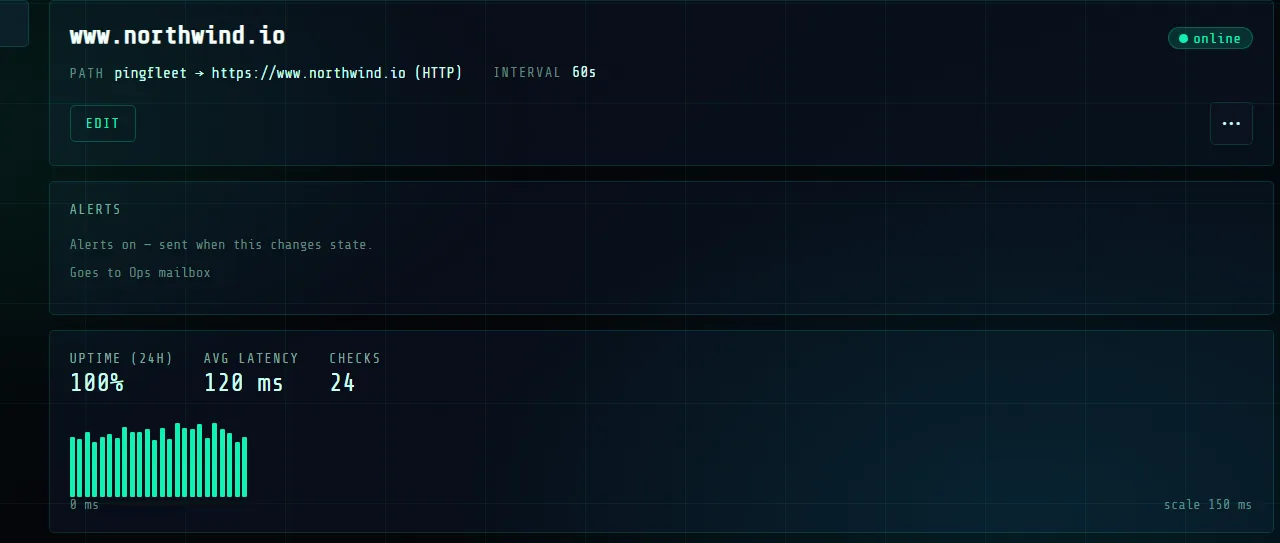
- Response time, recorded per check and kept for 90 days.
It comes with the rest of the platform
Every monitor type shares the same alerting, the same status pages and the same map: escalation with on-call hours, a public status page, checks from independent networks, and agents for anything the internet cannot reach.
Questions
- Can I check a page that requires authentication?
- Yes, by sending the header or token the endpoint expects. Credentials are stored encrypted and never appear in the check history.
- How often can it check?
- From every 5 minutes on the free plan, down to every 30 seconds on Pro. The interval you can choose is shown in the monitor dialog.
- What counts as down?
- A response that does not match your expected status, a missing content string, a TLS failure, or no response at all. On paid plans, enough locations have to agree before the monitor is called down.