Status pages
Public status pages
Publish the services you choose and the incidents you decide to tell people about. Nothing joins the page by accident.
Services and incidents are both opt-in
Monitors appear only when you say so. The name of a check is very often the name of a host, vpn.internal.example.com, and a page that publishes every monitor the moment it is saved publishes that too.
Incidents work the same way: PingFleet opens one the instant a service fails, and it stays internal until somebody publishes it. The page is not silent in the meantime, because the service rows turn red on their own. What needs a human is the explanation.
- Several pages per account, each with its own services
- Your own domain, verified by a DNS record before it is served
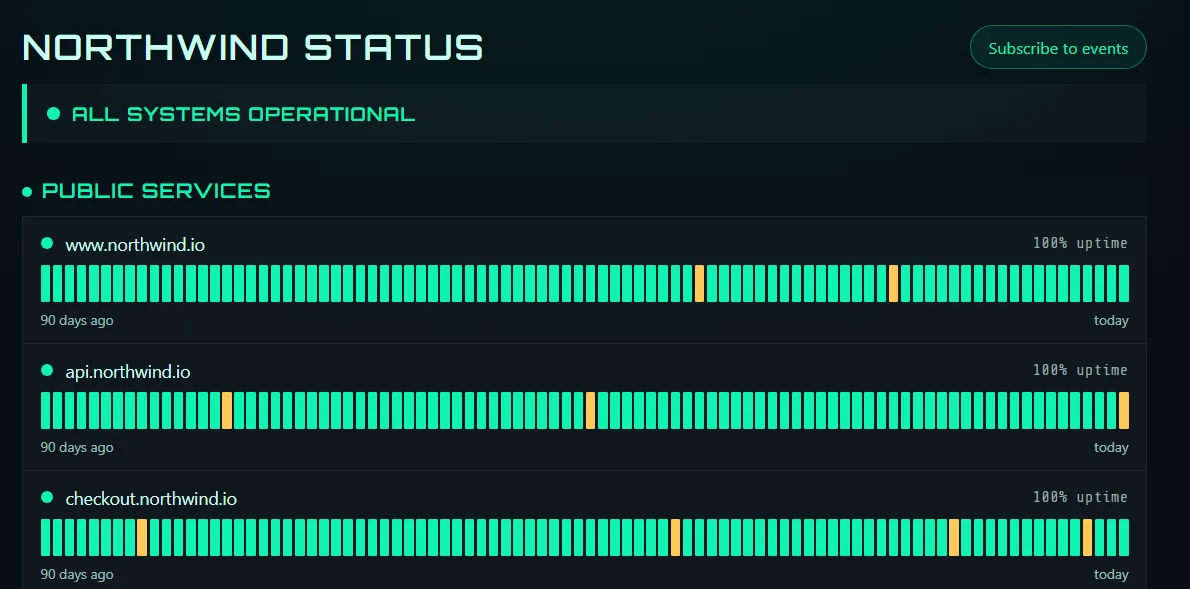
- Seven, thirty and ninety day uptime from the stored checks
The thread
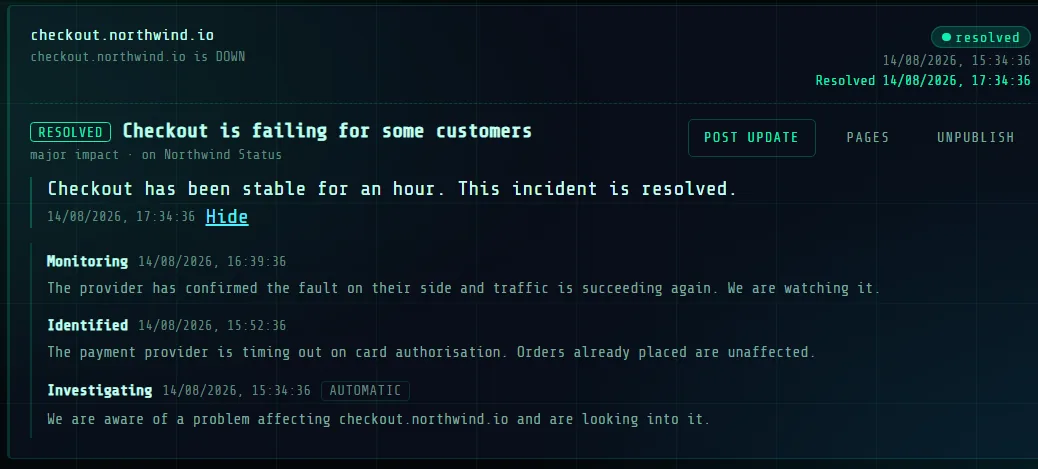
The incident thread
The vocabulary your customers already recognise from every other status page they have read, newest first.
When the checks recover, PingFleet posts that as an observation and moves the thread to monitoring, never to resolved. "The ping came back" and "the problem is fixed" are different claims, and only you make the second one.
Subscribers and double opt-in
Visitors can subscribe to the whole page or to one incident. Every subscription is confirmed by email first: the form is public, and without confirmation anybody could sign anybody up for mail carrying your brand.
Every message carries an unsubscribe button rather than a bare link, because corporate mail scanners open every URL in a message before the recipient sees it.
Questions
- Can I use my own domain?
- On paid plans, yes. You point a CNAME at us and we verify a TXT record before serving anything on it, so nobody can attach a page to a domain they do not control.
- Is every monitor shown?
- Only the ones you add. A status page is a publication, and the default is that nothing is on it: internal checks stay internal.
- What do visitors see for each service?
- Its current state and a 90-day strip, which is exactly as far back as check history is kept.
- Do subscribers have to confirm?
- Yes, by email, before anything is sent to them. Without double opt-in a status page is a way to sign a stranger up for mail they never asked for.
- Can I run more than one page?
- Yes. Different audiences get different pages, each with its own services, theme and subscribers.
- Are incidents published automatically?
- Only if you switch that on for the page. Otherwise an incident stays private until you publish it, and the text is drafted for you to edit rather than sent as written.